AHU Air Handling Unit: Complete Guide to Advanced HVAC Climate Control Systems

All Categories

Get a Free Quote

Our representative will contact you soon.
Email
Name
Company Name
Attachment
Please upload at least an attachment
Up to 3 files,more 30mb,suppor jpg、jpeg、png、pdf、doc、docx、xls、xlsx、csv、txt
Message
0/1000

Get a Free Quote

Our representative will contact you soon.
Email
Name
Company Name
Attachment
Please upload at least an attachment
Up to 3 files,more 30mb,suppor jpg、jpeg、png、pdf、doc、docx、xls、xlsx、csv、txt
Message
0/1000

ahu air handling unit

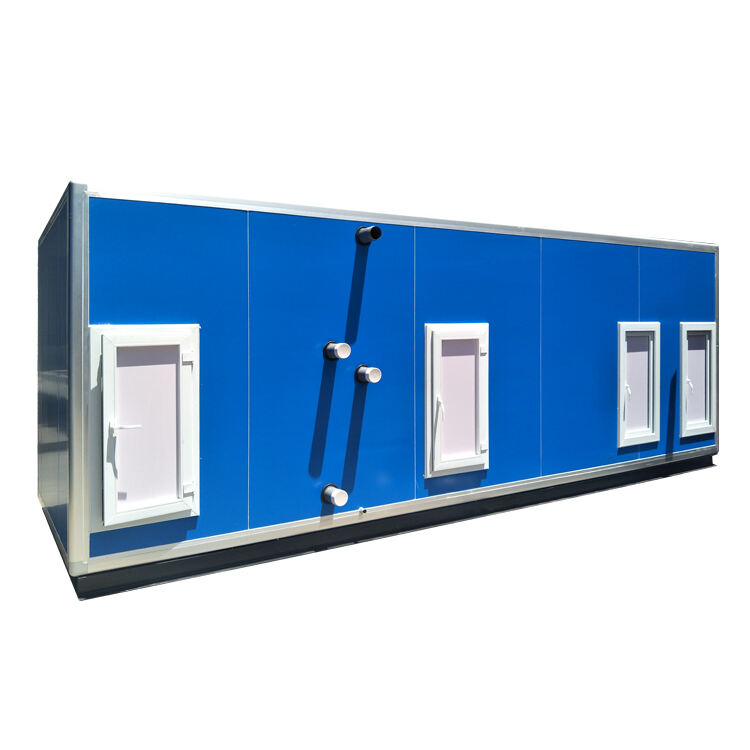
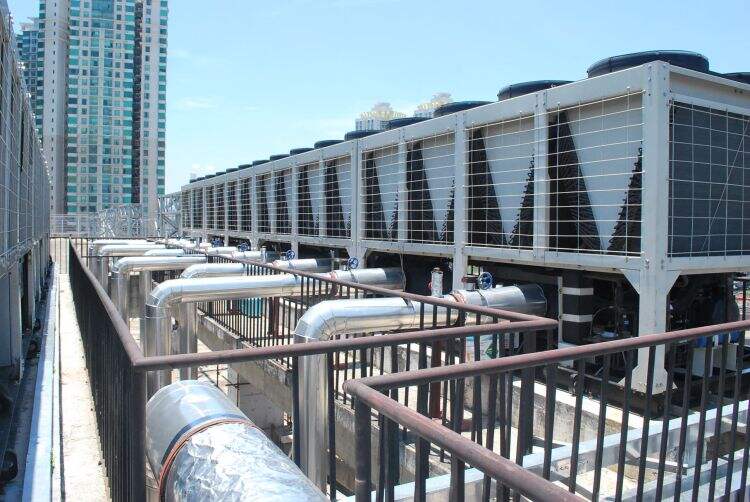
An ahu air handling unit serves as the central component in modern heating, ventilation, and air conditioning systems, designed to regulate and circulate air throughout commercial buildings, industrial facilities, and large residential complexes. This sophisticated equipment conditions indoor air by controlling temperature, humidity, and air quality while ensuring optimal comfort for occupants. The ahu air handling unit operates by drawing in outside air or recirculating indoor air, processing it through various filtration and conditioning stages, then distributing the treated air through ductwork to designated spaces. The primary functions of an ahu air handling unit include air filtration to remove contaminants and particulates, temperature control through heating or cooling coils, humidity regulation via humidification or dehumidification processes, and air circulation using powerful fan systems. Modern ahu air handling unit designs incorporate advanced technological features such as variable speed drives that adjust fan speeds based on demand, energy recovery systems that capture and reuse thermal energy from exhaust air, and intelligent control systems that optimize performance while minimizing energy consumption. These units typically consist of several key components including filter sections with multiple filtration stages, heating and cooling coils for temperature adjustment, humidifiers or dehumidifiers for moisture control, mixing chambers for blending fresh and return air, and fan sections for air movement. The ahu air handling unit finds extensive applications across diverse sectors including hospitals where precise air quality control prevents infection spread, data centers requiring consistent temperature and humidity levels, manufacturing facilities needing contamination-free environments, office buildings seeking comfortable working conditions, educational institutions maintaining healthy learning spaces, and hospitality venues ensuring guest comfort. The versatility of an ahu air handling unit allows customization to meet specific requirements, with configurations ranging from compact rooftop units for smaller buildings to large modular systems for expansive facilities, making them indispensable in contemporary building management strategies.


New Products

The ahu air handling unit delivers substantial benefits that directly impact operational efficiency and occupant wellbeing. Energy savings represent a primary advantage, as modern ahu air handling unit systems incorporate intelligent controls and variable speed technology that reduce power consumption by up to forty percent compared to traditional constant-volume systems. These units adjust their operation based on actual demand rather than running at full capacity continuously, which translates to lower utility bills and reduced environmental impact. The improved indoor air quality provided by an ahu air handling unit creates healthier environments by removing airborne pollutants, allergens, and pathogens through multi-stage filtration systems. This benefit proves particularly valuable in healthcare settings, schools, and office buildings where air quality directly affects productivity and health outcomes. Occupants experience fewer respiratory issues, reduced allergy symptoms, and enhanced overall comfort when breathing air processed by a properly maintained ahu air handling unit. Temperature consistency throughout a building represents another significant advantage, as the ahu air handling unit eliminates hot and cold spots by distributing conditioned air evenly across all zones. This uniform climate control enhances comfort and prevents complaints from occupants in different areas of the facility. The humidity control capabilities of an ahu air handling unit prevent problems associated with excessive moisture or dryness, protecting building materials from mold growth and deterioration while maintaining comfortable conditions for people. Flexibility in system design allows an ahu air handling unit to adapt to changing building requirements, with modular components that can be upgraded or reconfigured as needs evolve. Building owners appreciate this scalability because it protects their investment and extends system lifespan. Noise reduction features built into modern ahu air handling unit designs create quieter indoor environments by incorporating sound-dampening materials and vibration isolation, which proves essential in settings like hotels, hospitals, and office spaces where noise disruption affects satisfaction and performance. Maintenance accessibility represents a practical advantage, as the ahu air handling unit typically features serviceable components arranged for easy access, reducing downtime and service costs. Technicians can quickly replace filters, inspect coils, and perform routine maintenance without extensive disassembly. The remote monitoring capabilities available with contemporary ahu air handling unit systems enable facility managers to track performance metrics, receive alerts about potential issues, and optimize settings from centralized control platforms, improving response times and preventing costly breakdowns. Space efficiency achieved through compact ahu air handling unit designs maximizes usable building area while still delivering comprehensive climate control, particularly important in urban environments where real estate costs remain high.

Practical Tips

What Materials Are Recommended for Pass Box Construction?

05

Nov

What Materials Are Recommended for Pass Box Construction?

Essential Materials for Modern Pass Box Manufacturing Pass boxes serve as critical components in cleanroom environments, pharmaceutical facilities, and laboratories, facilitating the secure transfer of materials between spaces while maintaining contr...
View More
What Are the Benefits of Modular Air Handling Units

02

Dec

What Are the Benefits of Modular Air Handling Units

Modern industrial facilities and commercial buildings face increasingly complex air quality challenges that require sophisticated yet adaptable solutions. Traditional HVAC systems often fall short when facilities need to expand, modify operations, or...
View More
What Are the Applications of Clean Air Systems in Pharmaceuticals

02

Dec

What Are the Applications of Clean Air Systems in Pharmaceuticals

The pharmaceutical industry operates under stringent regulatory requirements where product quality, safety, and efficacy are paramount. Contamination control represents one of the most critical aspects of pharmaceutical manufacturing, making clean ai...
View More
What Happens to Production Stability Without a Proper Cleanroom System?

30

Jan

What Happens to Production Stability Without a Proper Cleanroom System?

Manufacturing environments face critical challenges when operating without adequate contamination control measures. A properly designed cleanroom system serves as the foundation for maintaining consistent product quality, regulatory compliance, and o...
View More

Get a Free Quote

Our representative will contact you soon.
Email
Name
Company Name
Attachment
Please upload at least an attachment
Up to 3 files,more 30mb,suppor jpg、jpeg、png、pdf、doc、docx、xls、xlsx、csv、txt
Message
0/1000

ahu air handling unit

Advanced Filtration Technology for Superior Air Quality

Advanced Filtration Technology for Superior Air Quality

The filtration system within an ahu air handling unit represents one of its most critical features, directly impacting the health and comfort of building occupants while protecting sensitive equipment from contamination. Modern ahu air handling unit designs incorporate multi-stage filtration approaches that progressively remove particles of varying sizes, from large debris to microscopic pathogens. The first stage typically employs pre-filters that capture larger particles like dust, pollen, and textile fibers, extending the life of downstream filters and reducing maintenance frequency. These pre-filters in an ahu air handling unit use pleated media or panel designs that balance airflow resistance with particle capture efficiency. The secondary filtration stage features medium-efficiency filters rated according to industry standards, removing smaller particles that escaped the pre-filter while maintaining acceptable pressure drops across the ahu air handling unit. For applications requiring exceptional air purity, such as hospitals, laboratories, and cleanrooms, the ahu air handling unit can incorporate high-efficiency particulate air filters capable of removing ninety-nine point ninety-seven percent of particles as small as point three microns. This level of filtration proves essential in medical environments where airborne pathogens pose serious risks to immunocompromised patients. Some advanced ahu air handling unit configurations include activated carbon filters that address gaseous contaminants and odors, particularly valuable in industrial settings or buildings located in areas with poor outdoor air quality. The filter monitoring systems integrated into modern ahu air handling unit designs track pressure differentials across filter banks, alerting maintenance personnel when filters require replacement based on actual loading rather than arbitrary time schedules. This intelligent approach optimizes filter life while ensuring the ahu air handling unit maintains design airflow rates and filtration efficiency. The accessibility of filter sections in a well-designed ahu air handling unit simplifies replacement procedures, with hinged access doors and slide-out filter racks that allow technicians to service the system quickly without specialized tools. Building owners benefit from the long-term cost savings associated with proper filtration in an ahu air handling unit, as clean air reduces cleaning requirements for interior surfaces, protects HVAC components from fouling, and decreases absenteeism related to poor indoor air quality. The environmental benefits extend beyond the building itself, as efficient filtration in an ahu air handling unit reduces the need for excessive ventilation rates, lowering energy consumption while maintaining healthy indoor conditions.
Energy Recovery Systems for Maximum Efficiency

Energy Recovery Systems for Maximum Efficiency

Energy recovery technology integrated into an ahu air handling unit represents a transformative feature that dramatically reduces operational costs while supporting sustainability goals. The energy recovery wheel or heat exchanger within an ahu air handling unit captures thermal energy from exhaust air that would otherwise be wasted and transfers it to incoming fresh air, pre-conditioning the supply air before it reaches heating or cooling coils. During winter months, the ahu air handling unit recovers heat from warm exhaust air and transfers it to cold incoming air, reducing the heating load on the system. Conversely, in summer, the energy recovery section of the ahu air handling unit pre-cools hot incoming air using cooler exhaust air, decreasing the cooling demand. This bidirectional energy transfer can recover sixty to eighty percent of the thermal energy that would otherwise be lost, translating to substantial reductions in energy consumption. The enthalpy wheels used in advanced ahu air handling unit designs transfer both sensible heat and latent heat, managing humidity along with temperature for comprehensive energy recovery. This dual transfer proves particularly beneficial in humid climates where dehumidification represents a significant portion of cooling loads. The ahu air handling unit equipped with energy recovery technology achieves faster return on investment through reduced utility costs, with payback periods often ranging from three to five years depending on climate conditions and operating schedules. Building owners pursuing green building certifications find that an ahu air handling unit with energy recovery contributes valuable points toward LEED, BREEAM, or similar rating systems. The environmental impact reduction achieved through energy recovery in an ahu air handling unit extends beyond direct energy savings, as decreased power consumption translates to lower greenhouse gas emissions from electricity generation. Modern ahu air handling unit designs incorporate bypass dampers that allow the system to operate without energy recovery during mild weather when outdoor conditions require minimal conditioning, optimizing performance across all seasons. The maintenance requirements for energy recovery components in an ahu air handling unit remain manageable, with periodic cleaning of heat exchange surfaces ensuring sustained efficiency. Frost control strategies built into cold-climate ahu air handling unit configurations prevent ice formation on energy recovery wheels during extreme winter conditions, maintaining reliable operation throughout the year. The integration of energy recovery with variable speed fan controls in an ahu air handling unit creates synergistic efficiency gains, as reduced airflow requirements during partial load conditions further decrease energy consumption while the recovery system continues capturing available thermal energy.
Intelligent Control Systems for Optimal Performance

Intelligent Control Systems for Optimal Performance

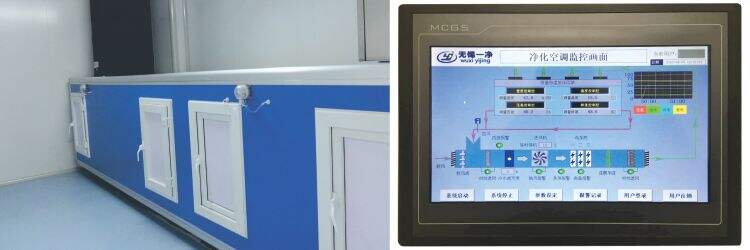
The control technology embedded in a modern ahu air handling unit transforms it from a simple mechanical system into an intelligent climate management platform that continuously optimizes performance based on real-time conditions and occupancy patterns. The building automation system interface of an ahu air handling unit enables seamless integration with broader facility management systems, allowing coordinated control of lighting, security, and HVAC equipment from unified platforms. Sensors distributed throughout the ahu air handling unit monitor critical parameters including supply air temperature, return air temperature, humidity levels, filter pressure drops, fan speeds, and damper positions, feeding data to controllers that make instantaneous adjustments to maintain setpoints. The demand-controlled ventilation capability of an advanced ahu air handling unit uses carbon dioxide sensors to detect occupancy levels and adjust fresh air intake accordingly, providing adequate ventilation when spaces are occupied while reducing unnecessary air changes during vacant periods. This intelligent ventilation strategy in an ahu air handling unit can reduce energy consumption by twenty to thirty percent in buildings with variable occupancy patterns like conference centers, theaters, and educational facilities. The scheduling functions built into ahu air handling unit controllers allow facility managers to program different operating modes for various times of day, days of week, and special events, ensuring the system operates efficiently without manual intervention. Night setback modes programmed into the ahu air handling unit reduce conditioning during unoccupied hours while maintaining minimum ventilation rates for air quality, then ramp up to full capacity before occupants arrive. The predictive maintenance algorithms incorporated into sophisticated ahu air handling unit control systems analyze performance trends to identify developing issues before they cause failures, scheduling service interventions during convenient times rather than responding to emergency breakdowns. Remote access capabilities enable facility managers to monitor and adjust ahu air handling unit settings from smartphones or computers regardless of location, providing flexibility and rapid response to changing conditions. The data logging features of modern ahu air handling unit controllers create detailed performance records that support energy audits, troubleshooting efforts, and optimization studies, helping building owners understand system behavior and identify improvement opportunities. Alarm notification systems integrated into the ahu air handling unit alert appropriate personnel immediately when parameters exceed acceptable ranges, enabling quick responses that prevent minor issues from escalating into major problems. The self-tuning capabilities of advanced ahu air handling unit controllers automatically adjust control parameters to maintain stable operation as system characteristics change over time due to filter loading, coil fouling, or other factors, reducing the need for manual commissioning adjustments.

Get a Free Quote

Our representative will contact you soon.
Email
Name
Company Name
Attachment
Please upload at least an attachment
Up to 3 files,more 30mb,suppor jpg、jpeg、png、pdf、doc、docx、xls、xlsx、csv、txt
Message
0/1000

Get a Free Quote

Our representative will contact you soon.
Email
Name
Company Name
Attachment
Please upload at least an attachment
Up to 3 files,more 30mb,suppor jpg、jpeg、png、pdf、doc、docx、xls、xlsx、csv、txt
Message
0/1000